
🚪 The Genkan — Entryway Rules
 ▶ Video Coming Soon
🎬 How to Remove Shoes at a Japanese Genkan

What Is a Genkan?
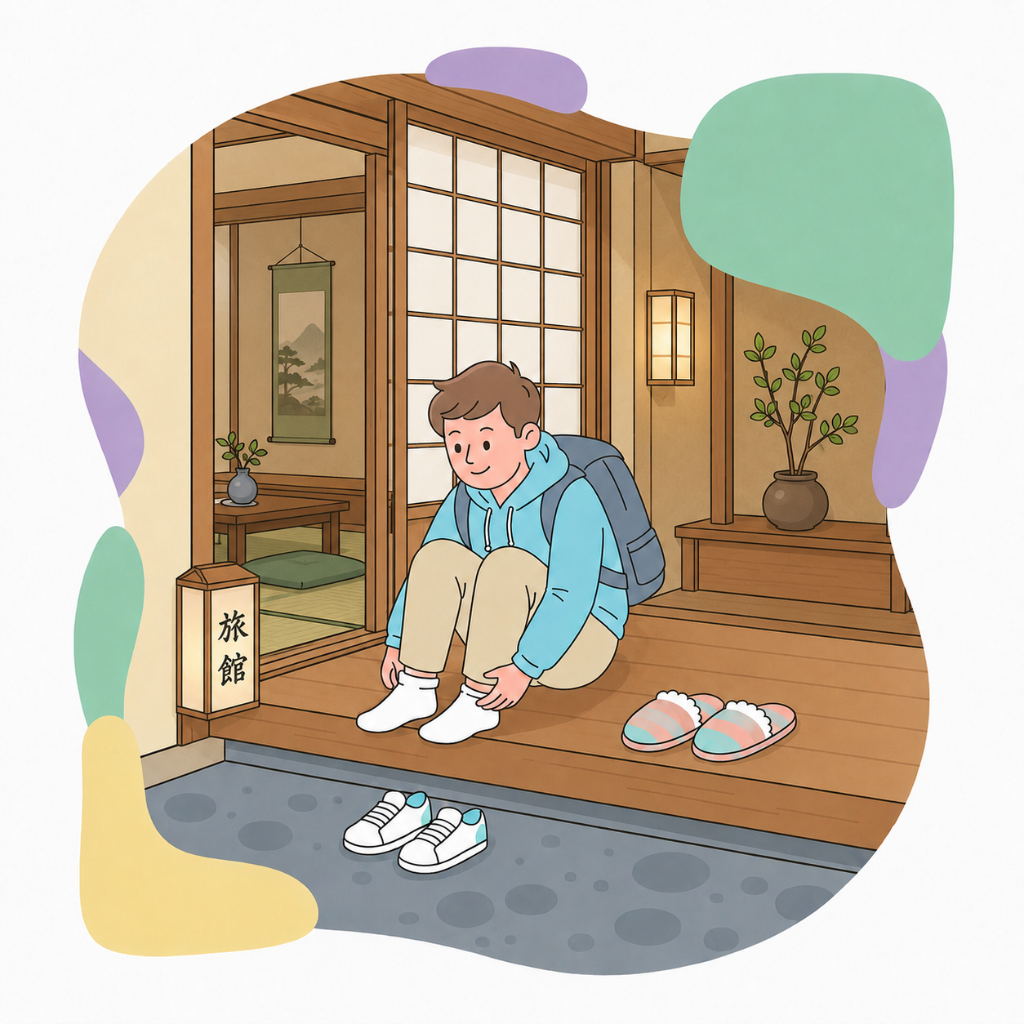
The genkan (玄関) is the lowered entryway at the entrance of Japanese homes, ryokan, some restaurants, and traditional buildings. It is the designated zone for removing shoes. The transition from the lower genkan floor to the raised interior marks the boundary between "outside" and "inside" — and shoes must never cross that line.
Remove Shoes in the Genkan
Always take off your shoes in the genkan area, before stepping up into the main interior. Never walk past the genkan with shoes on.
Point Shoes Toward the Door
After removing your shoes, turn them to face the exit. This is a small but meaningful gesture of tidiness and thoughtfulness.
Wear Clean Socks
You will be walking barefoot or in socks frequently in Japan. Always wear clean, hole-free socks when visiting traditional spaces.
🛖 Tatami Room Rules
✅ Do This
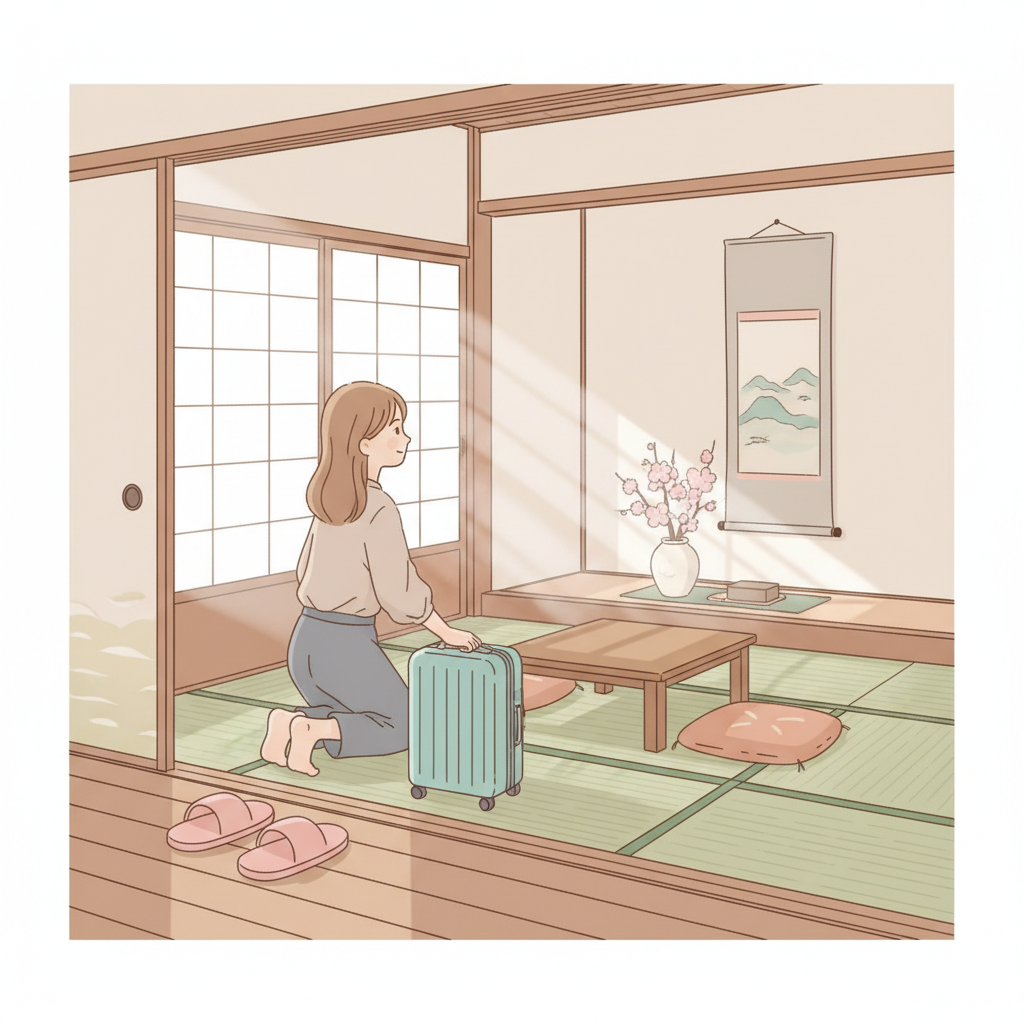
- Remove slippers before entering tatami rooms
- Sit in seiza or cross-legged on the floor
- Walk softly to avoid damaging the mat
- Keep food and drinks off the tatami
- Fold your futon in the morning
❌ Avoid This
- Never wear shoes or slippers on tatami
- Don't drag heavy furniture across it
- Don't place bags directly on the tatami
- Don't sit with legs stretched toward guests
- Don't step on the border edges (heri)
🩴 Slipper Zones
 ▶ Video Coming Soon
🎬 Do Not Wear Slippers on Tatami
House Slippers
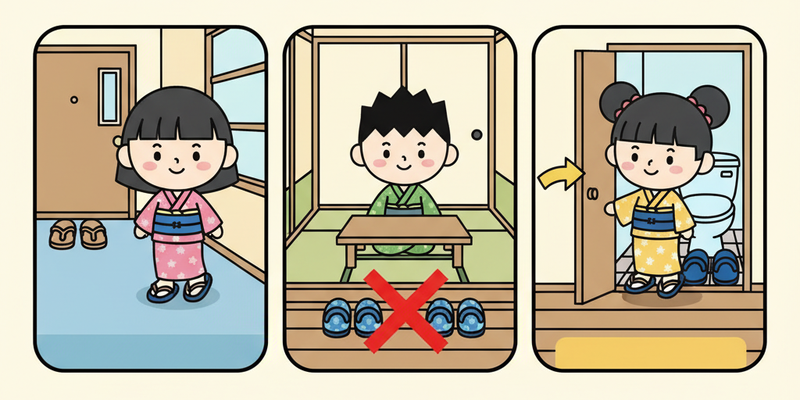
Most ryokan and traditional homes provide slippers for indoor use. Wear them in corridors and wood-floored rooms — never on tatami. When switching to outdoor shoes, place the slippers back in their designated spot at the entrance.
Toilet Slippers
 ▶ Video Coming Soon
🎬 Toilet Slippers Stay Inside the Toilet Room
A separate pair of slippers is placed at the bathroom entrance. Switch to these when entering — and switch back when leaving. Forgetting is a common and embarrassing mistake!
No Slippers on Tatami
Remove slippers before entering any tatami room. Even ryokan slippers are not worn on tatami mats.
🏯 Ryokan Stay Guide
Check In with Both Hands
Present your ID or reservation confirmation with both hands. A small bow and a warm "Yoroshiku onegaishimasu" is greatly appreciated.
Change into Yukata
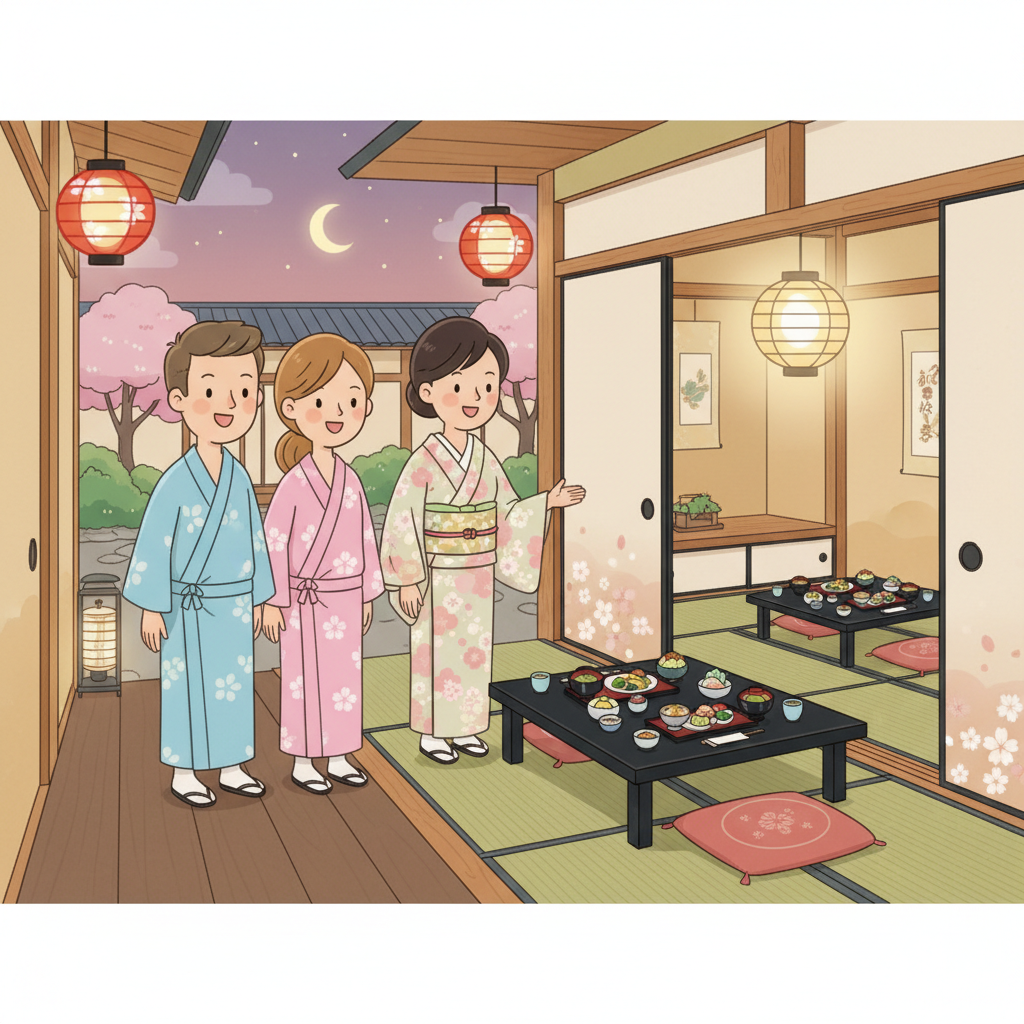
Your room will have a yukata (casual kimono). Wear it in your room and in common areas like the onsen. Wrap left side over right — right over left is for funerals.
Dinner Timing Matters
Ryokan dinners are often set at a specific time. Confirm your slot at check-in and don't be late — the chef prepares everything fresh and timed.
Futon Setup
Staff will lay out your futon while you're at dinner. In the morning, fold it and stack it neatly against the wall or in the closet.
Quiet Hours
Ryokan are peaceful places. Keep noise to a minimum after 9–10pm and be mindful of other guests in shared spaces.
👘 Yukata — How to Wear It
Left Side Over Right
Always wrap the left side of the yukata over the right side. Right over left is reserved for funeral attire — a critical distinction in Japanese culture.
Secure the Obi (Sash)
Tie the obi sash firmly around your waist. Most ryokan include a simple pre-tied version. Ask staff to help — they are always happy to assist.
Wear It Loose but Neat
The yukata should be comfortable and relaxed, but not sloppy. Keep the collar in place and avoid letting the hem drag on the floor.
Where You Can Wear It
Wear your yukata in your room, at the onsen, during dinner, and in the common areas of the ryokan. At some ryokan, you can even stroll the nearby streets — it adds to the charm!
🍱 Kaiseki Dinner Etiquette
Be On Time
Kaiseki is a multi-course meal prepared fresh and served in sequence. Arriving late disrupts the entire experience — confirm your time slot at check-in.
Pour for Others First
If sharing sake or beer, pour for your companions before yourself. It's considered polite to keep others' glasses filled.
Follow the Order
Eat dishes in the order they are served. Don't mix courses or eat rice before finishing the soup — the sequence is intentional.
Say "Itadakimasu"
Before eating, say itadakimasu (いただきます) — a humble expression of gratitude for the meal. After finishing, gochisousama deshita thanks the chef.
✅ Shoes & Ryokan — Quick Reference
✅ Do This
- Remove shoes at the genkan and point them toward the exit
- Wear clean, hole-free socks at all times
- Switch to toilet slippers in the bathroom — and back out
- Remove slippers before stepping onto tatami
- Wrap yukata left over right
- Fold your futon in the morning
- Keep noise low after 9pm
❌ Avoid This
- Never walk into a room with shoes on past the genkan
- Don't wear house slippers on tatami
- Don't forget to switch out of toilet slippers
- Don't place bags or luggage directly on tatami
- Don't wrap yukata right over left
- Don't be late for your kaiseki dinner time slot
- Don't leave the futon unfolded in the morning