
⛩️ Visiting a Shinto Shrine
 ▶ Video Coming Soon
🎬 Shrine Prayer Steps: Bow, Clap, Wish, Bow
Bow at the Torii Gate
The torii gate marks the entrance to sacred ground. Pause and bow slightly before passing through.
Walk to the Side
Walk to the left or right of the center path (sando) — the center is reserved for the gods (kami).
 ▶ Video Coming Soon
🎬 How to Wash Hands at the Chozuya / Temizuya
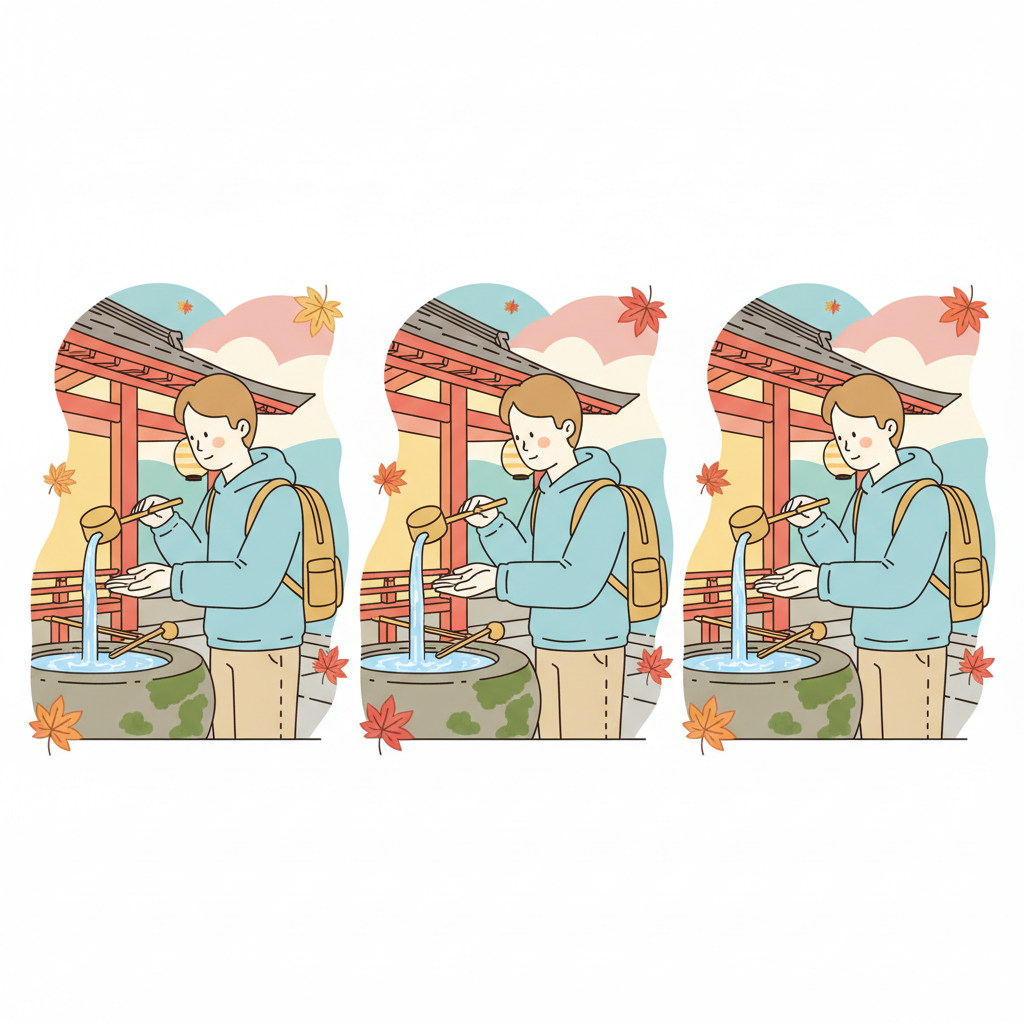
Purify at the Temizuya
Use the stone water basin to rinse both hands. Scoop water with your right hand, rinse left, then right, then rinse your mouth (optional), then the ladle handle.
Approach the Haiden
Walk to the main hall. Toss a coin into the offering box (any amount is fine — 5 yen coins are considered lucky).
Bow Twice, Clap Twice, Bow Once
The standard prayer sequence: bow deeply twice, clap twice, make your wish silently, then bow once more.
Visiting Kyoto shrines or temples?
A guided walking tour explains the meaning behind each ritual and takes you to spots most tourists miss.
Browse Kyoto Temple Tours →🪷 Visiting a Buddhist Temple
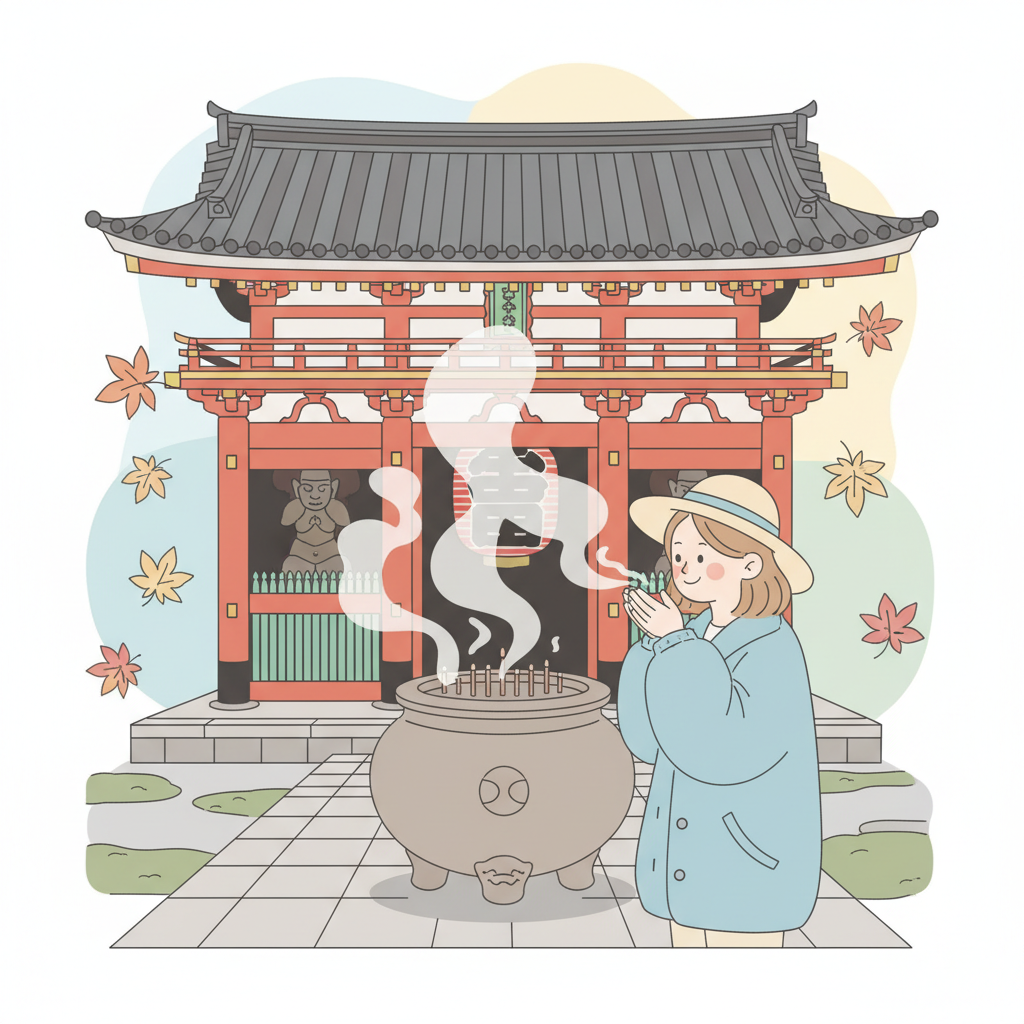
Bow at the Gate
Bow at the Sanmon (main gate). Unlike shrines, clapping is not done at Buddhist temples.
Light Incense
Light incense sticks and place them in the incense burner. Wave the smoke over yourself — it's believed to have healing properties.
Ring the Bell (if permitted)
Temple bells can sometimes be rung by visitors. Hit it gently once — never multiple times rapidly.
Silent Prayer
Clasp your hands together (gassho) and bow your head in silent prayer. No clapping — that's for shrines only.
📸 Photography Rules
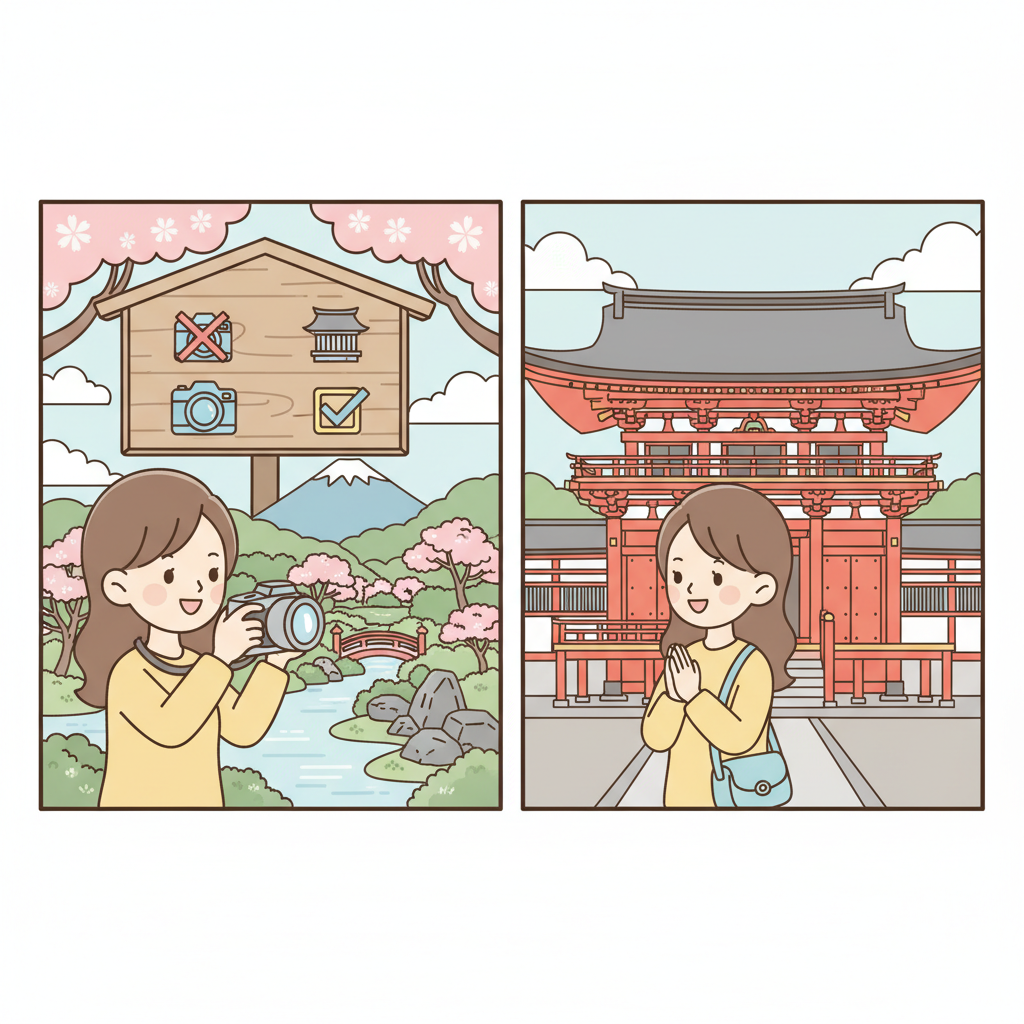
Check for Signs
Many inner sanctuaries prohibit photography. Always look for "No Photography" signs before taking pictures.
Be Discreet
Don't photograph people during prayer or religious ceremonies without permission. Respect the sacred atmosphere.
Grounds are Usually OK
Gardens, torii gates, and general temple grounds are usually fine to photograph. When in doubt, ask.
🎋 Omamori & Fortune Slips
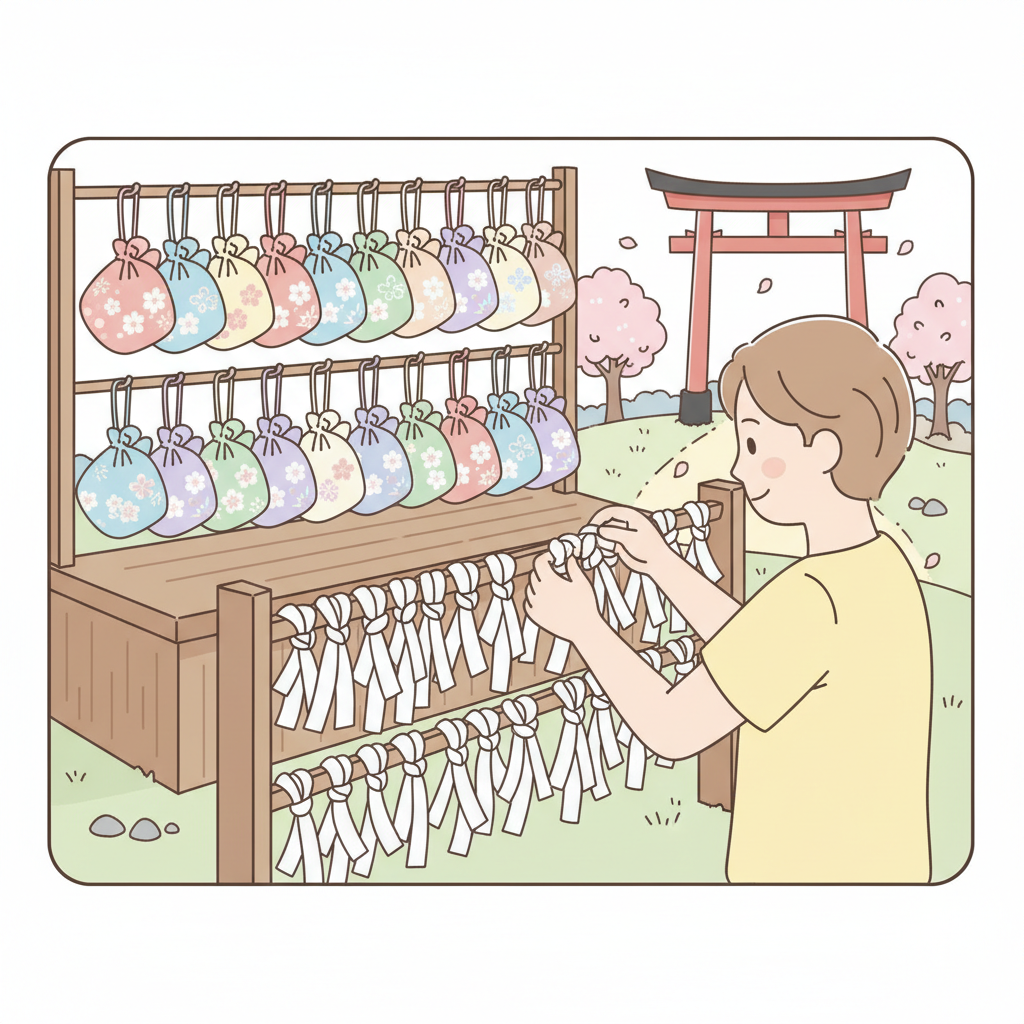
About Charms & Fortunes
Omamori are protective charms sold at shrines and temples. They should be kept close (in your bag or wallet) and replaced yearly. Don't open them — the power is said to escape! Omikuji are fortune slips — if you get a bad fortune (kyo), tie it to a designated wire or tree at the temple to leave the bad luck behind.
👘 Dress Code & Behaviour
✅ Do This
- Dress modestly — covered shoulders and knees are respectful
- Keep your voice low inside temple and shrine grounds
- Follow the indicated path — don't walk through the centre of a torii
- Dispose of rubbish properly or take it with you
- Turn your phone to silent inside worship halls
❌ Avoid This
- Don't eat or drink while walking through the grounds
- Don't touch statues, stone lanterns, or sacred objects
- Don't photograph the inner altar without permission
- Don't enter restricted areas marked with ropes or signs
- Don't discard omikuji fortunes on the ground
⛩️ Torii Gate Rules
Walk to the Side
The centre of the path leading to a shrine (the sando) is considered the path of the gods. Walk slightly to the left or right out of respect.
Bow Before Passing
Give a small bow before passing through a torii gate. This signals your intention to enter sacred space with a respectful mindset.
Multiple Torii Gates
At famous sites like Fushimi Inari, thousands of torii gates line the path. Walk respectfully — these are active places of worship, not just photo opportunities.
Sacred Trees & Ropes
Trees or rocks tied with shimenawa rope are sacred. Never touch, climb, or remove offerings placed at their base.