🙏 Basic Manners
Excuse me / Sorry
Excuse me / I'm sorry
すみません
Sumimasen
Use this for almost everything: getting someone's attention, squeezing past in a crowd, or apologizing for a small mistake. It is the most useful phrase in Japan.
Thank you
Thank you very much
ありがとうございます
Arigatou gozaimasu
A warm and genuine thank you. Use this at restaurants, shops, and whenever someone helps you. A simple arigatou is also appreciated in casual situations.
I don't understand
I don't understand
わかりません
Wakarimasen
Say this clearly and staff will usually try to help with gestures, maps, or a translation app. Don't be shy — it's better than guessing.
Do you speak English?
英語を話せますか?
Eigo o hanasemasu ka?
Useful at hotels, tourist spots, and train stations. Many staff will do their best to help even if they are not fluent.
🍜 Restaurant Phrases
Ordering
This one, please / [pointing to menu]
これをください
Kore o kudasai
Point to the item on the menu and say this. Works perfectly even without knowing the dish name.
Bill
Check / Bill, please
お会計をお願いします
Okaikei o onegai shimasu
In Japan, you generally ask for the bill rather than it being brought automatically. You can also write 「お会計」 on a napkin or use the air writing gesture.
Food allergy — no meat
I cannot eat meat
お肉が食べられません
Oniku ga taberaremasen
Show this or say it clearly. For allergies, it helps to carry a printed allergy card in Japanese.
Food allergy — no shellfish
I am allergic to shellfish
甲殻類アレルギーがあります
Koukakurui arerugi ga arimasu
Use for shrimp, crab, lobster, and similar shellfish allergies. Always inform the staff before ordering at seafood restaurants.
📸 Photography Phrases
Asking permission
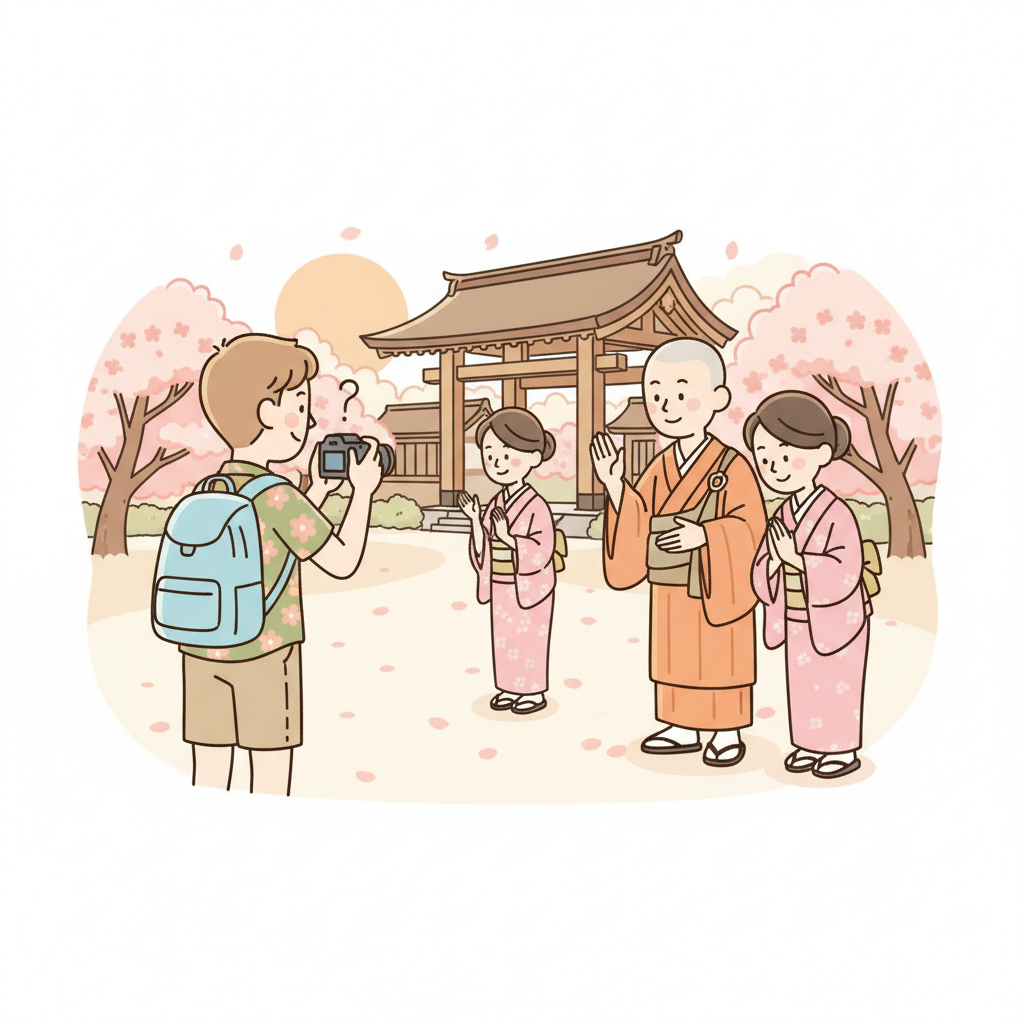
May I take a photo?
写真を撮ってもいいですか?
Shashin o totte mo ii desu ka?
Always ask before photographing people, shop interiors, temples, or private spaces. Most people will be happy to say yes — and they will appreciate that you asked.
Asking to be photographed
Could you take a photo of me?
写真を撮っていただけますか?
Shashin o totte itadakemasu ka?
Ask a nearby person or staff member to take a photo for you. Hand them your camera or phone and gesture at yourself.
♨️ Onsen & Ryokan Phrases
Private bath
Is there a private bath available?
貸切風呂はありますか?
Kashikiri buro wa arimasu ka?
Use at ryokan or onsen facilities to ask about private rental baths. Especially helpful if you have tattoos or prefer privacy.
Tattoos
Can people with tattoos use the onsen?
タトゥーがある人も入れますか?
Tattoo ga aru hito mo hairemasu ka?
It's best to ask before arriving. Many facilities now have private bath options for guests with tattoos.
Yukata
How do I wear the yukata?
浴衣の着方を教えていただけますか?
Yukata no kikata o oshiete itadakemasu ka?
Ask ryokan staff to help you put on your yukata correctly. Most staff are happy to assist — the left side always goes over the right.
🔍 Lost Items
Lost belongings
I lost my [item]
〇〇をなくしました
〇〇 o nakushimashita
Replace 〇〇 with the item (e.g., pasupōto = passport, saifu = wallet, keitai = phone). Japan has an excellent lost and found system — report immediately to the nearest koban (police box) or station staff.
Left item on train
I left something on the train
電車に忘れ物をしました
Densha ni wasuremono o shimashita
Report to the station office immediately. Japan's train lost and found system is highly reliable — items are often recovered the same day.
🏥 Medical Emergency
Emergency
Please call an ambulance
救急車を呼んでください
Kyūkyūsha o yonde kudasai
Emergency number in Japan is 119 (ambulance/fire). Police is 110. Show this phrase to anyone nearby if you need urgent help.
Feeling unwell
I feel sick / I feel dizzy
気分が悪いです / めまいがします
Kibun ga warui desu / Memai ga shimasu
Use at onsen (overheating is common), in crowded trains, or anywhere you feel unwell. Staff or nearby people will help you find a place to rest.
Allergy emergency
I am having an allergic reaction
アレルギー反応が出ています
Arerugii hannō ga dete imasu
For severe allergic reactions, call 119 immediately. Show this phrase to anyone nearby while waiting for help.
🚓 Police & Koban
Asking for help
Please help me
助けてください
Tasukete kudasai
Kobans (police boxes) are found in every neighborhood in Japan and are very approachable. The police number is 110.
Reporting theft
My [item] was stolen
〇〇を盗まれました
〇〇 o nusumaremashita
Theft is rare in Japan but does happen in crowded tourist areas. Report immediately to the nearest koban. You will receive a report certificate useful for insurance claims.
🚄 Transportation Phrases
Asking directions
Where is [place]?
〇〇はどこですか?
〇〇 wa doko desu ka?
Show the destination name on your phone. Most station staff can help even without English. Google Maps works very well throughout Japan.
Wrong train
I got on the wrong train
電車を乗り間違えました
Densha o norimachigaemashita
Show this to station staff at the nearest stop. They will guide you to the correct platform. IC card mistakes can usually be corrected at the ticket gate.
👟 Shoes & Facilities
Shoes off
Should I remove my shoes here?
ここで靴を脱いだほうがいいですか?
Koko de kutsu o nuida hō ga ii desu ka?
When you see a raised floor or step at an entrance, you almost certainly need to remove your shoes. If unsure, this phrase will get a clear answer.
Toilet location
Where is the toilet?
トイレはどこですか?
Toire wa doko desu ka?
Japanese public toilets are clean and free. Department stores, convenience stores, and train stations always have them.
🛍️ Shopping Phrases
How much is this?
How much is this?
これはいくらですか?
Kore wa ikura desu ka?
You can also simply point to the item. Most shops display prices clearly, and many accept payments via IC card or credit card.
Just looking
I'm just looking, thank you
見ているだけです、ありがとうございます
Mite iru dake desu, arigatou gozaimasu
Shop staff in Japan are attentive and may approach you to help. This polite phrase lets them know you're browsing without feeling dismissed.
Tax-free shopping
Can I get tax-free?
免税はできますか?
Menzei wa dekimasu ka?
Many shops offer tax-free purchases for tourists spending over ¥5,000. Have your passport ready — staff will process the paperwork at the register.
Gift wrapping
Could you gift wrap this?
プレゼント用に包んでいただけますか?
Purezento-yō ni tsutsunde itadakemasu ka?
Japanese gift wrapping is an art form. Most department stores and souvenir shops offer it free of charge — the result is always beautiful.
📞 Emergency Numbers
Police
110
警察:110
Keisatsu: hyaku-juu
Call 110 for police. Kobans (police boxes) are found in every neighbourhood and are safe and approachable for any problem including theft, getting lost, or accidents.
Ambulance / Fire
119
救急・消防:119
Kyūkyū・Shōbō: hyaku-juu-kyuu
Call 119 for ambulance or fire services. English support is available 24/7 in most major cities through the Japan Helpline.
Japan Helpline (English)
0570-000-911
ジャパンヘルプライン:0570-000-911
Japan Helpline: 0570-000-911
24-hour English-language support for emergencies, medical issues, and legal problems in Japan. Save this number before you travel.
Japan Tourist Hotline
050-3816-2787
観光案内電話:050-3816-2787
Kankō annai: 050-3816-2787
Free multilingual tourist consultation by Japan Tourism Agency. Available daily 8am–9pm. Great for general questions, directions, and travel advice.
📱 Worried about communication in Japan?
Stay connected everywhere in Japan with a Japan eSIM — available instantly on your phone before you land.
Browse Japan eSIM Options →