
🙏 Basic Manners
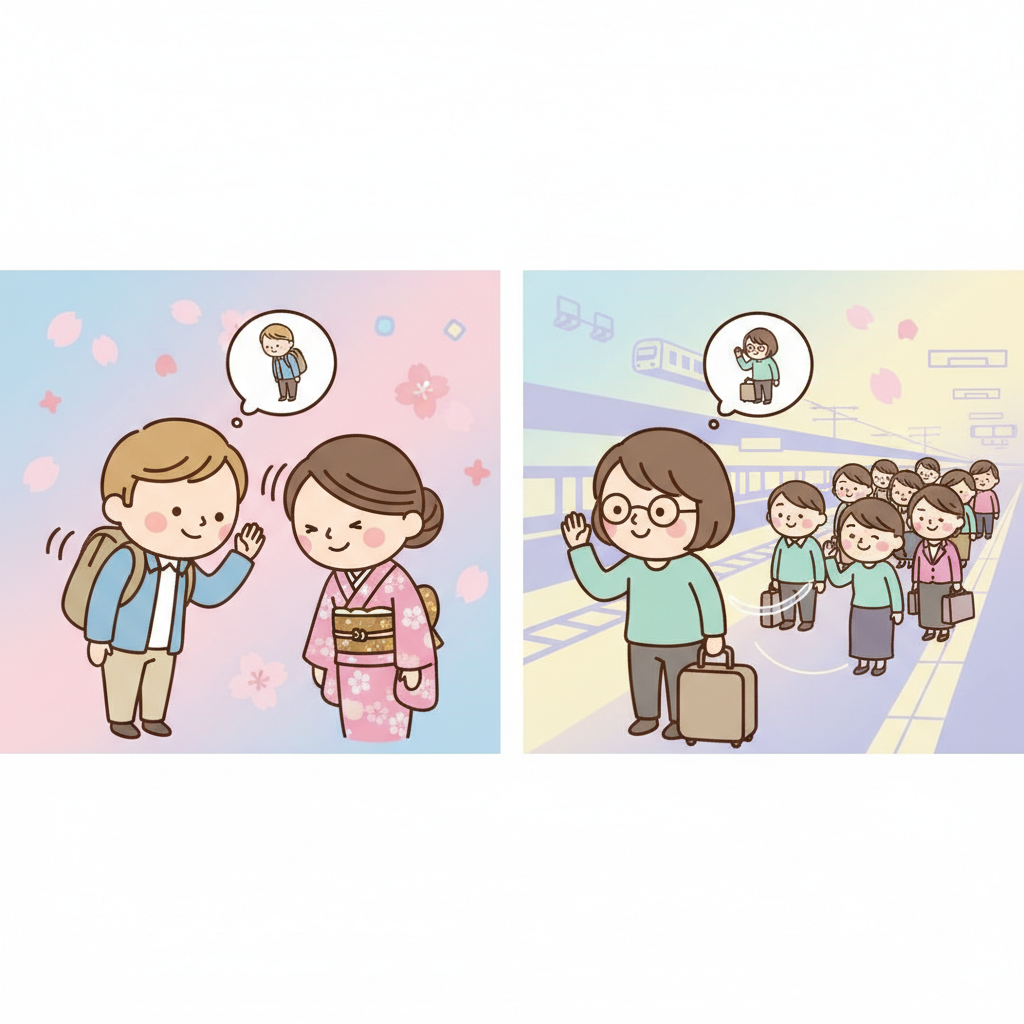
Excuse me / Sorry
Excuse me / I'm sorry
すみません
Sumimasen
Use this for almost everything: getting someone's attention, squeezing past in a crowd, or apologizing for a small mistake. It is the most useful phrase in Japan.
Thank you
Thank you very much
ありがとうございます
Arigatou gozaimasu
A warm and genuine thank you. Use this at restaurants, shops, and whenever someone helps you. A simple arigatou is also appreciated in casual situations.
I don't understand
I don't understand
わかりません
Wakarimasen
Say this clearly and staff will usually try to help with gestures, maps, or a translation app. Don't be shy — it's better than guessing.
Do you speak English?
Do you speak English?
英語を話せますか?
Eigo o hanasemasu ka?
Useful at hotels, tourist spots, and train stations. Many staff will do their best to help even if they are not fluent.
🍜 Restaurant Phrases
Ordering
This one, please / [pointing to menu]
これをください
Kore o kudasai
Point to the item on the menu and say this. Works perfectly even without knowing the dish name.
Bill
Check / Bill, please
お会計をお願いします
Okaikei o onegai shimasu
In Japan, you generally ask for the bill rather than it being brought automatically. You can also write 「お会計」 on a napkin or use the air writing gesture.
Food allergy — no meat
I cannot eat meat
お肉が食べられません
Oniku ga taberaremasen
Show this or say it clearly. For allergies, it helps to carry a printed allergy card in Japanese.
Food allergy — no shellfish
I am allergic to shellfish
甲殻類アレルギーがあります
Koukakurui arerugi ga arimasu
Use for shrimp, crab, lobster, and similar shellfish allergies. Always inform the staff before ordering at seafood restaurants.
📸 Photography Phrases
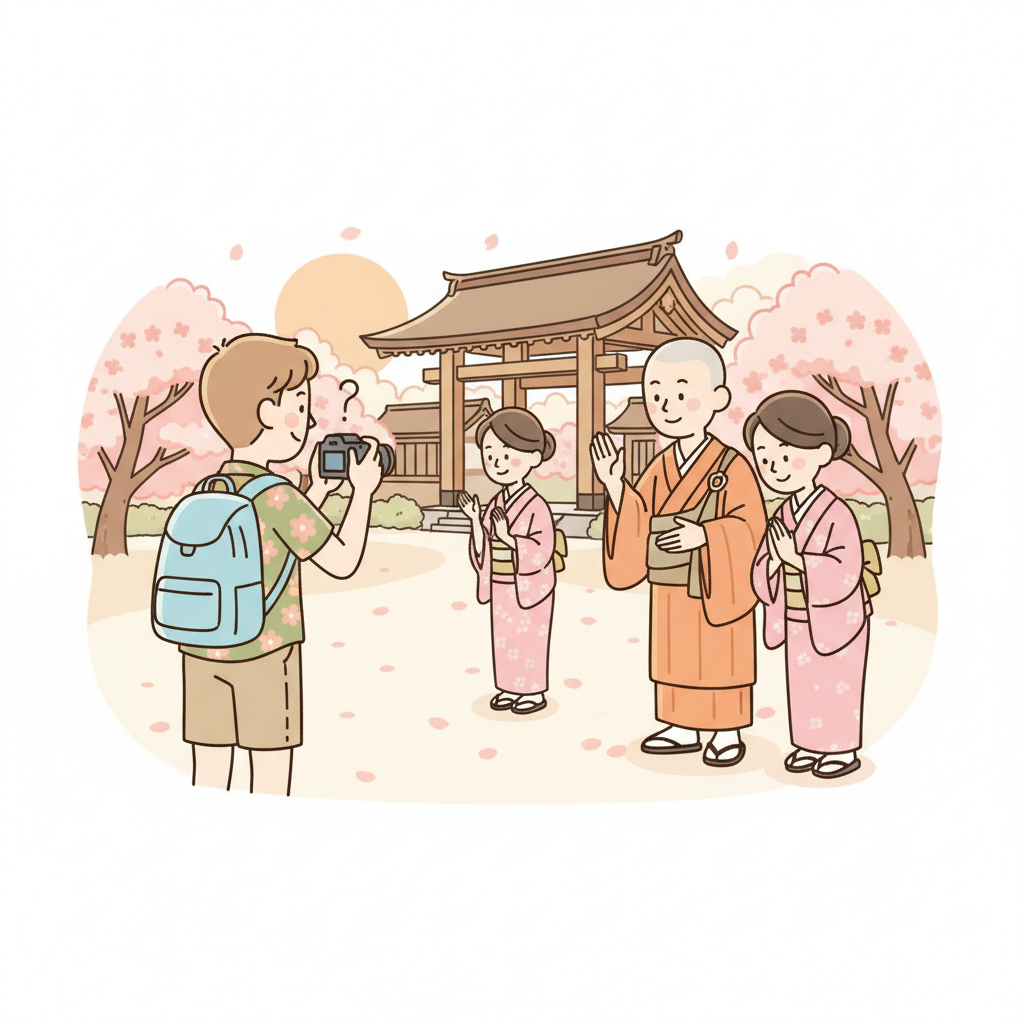
Asking permission
May I take a photo?
写真を撮ってもいいですか?
Shashin o totte mo ii desu ka?
Always ask before photographing people, shop interiors, temples, or