⚡ Quick Answer
✅ Do
- Buy a dedicated goshuincho book
- Pray or visit the main hall first
- Have ¥300–500 cash ready
- Handle the book with respect
- Appreciate the handwritten calligraphy
❌ Avoid
- Using a regular notebook or sketchbook
- Going only for the stamp without visiting
- Rushing the priest at the counter
- Treating it as a tourist collection item
What Is Goshuin?
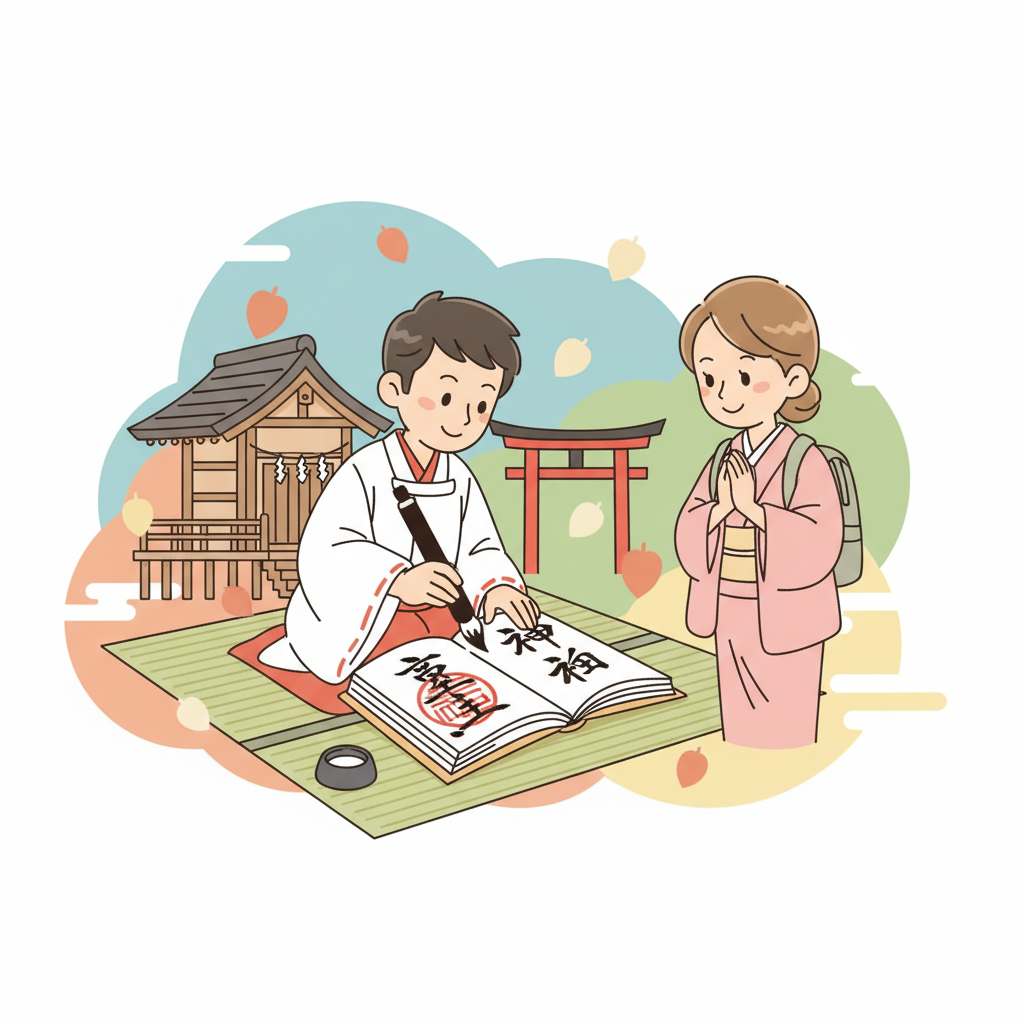
Goshuin (御朱印) are special vermilion ink stamps combined with hand-written calligraphy, given by priests and monks at shrines and temples as a record of your visit and prayer.
Each goshuin is unique — created by hand, on the spot, by whoever is staffing the goshuin counter that day. The calligraphy varies by person, season, and location. Unlike a tourist stamp at a museum, a goshuin is considered a sacred memento of your spiritual visit.
This is an important distinction. Goshuin are meant for people who have visited the shrine or temple and made a prayer or offering — not simply as a collectible for tourists who didn't go inside.
What You Need: The Goshuincho Book
You must bring a goshuincho (御朱印帳) — a dedicated accordion-fold book made specifically for collecting goshuin. These books have thick pages that hold the ink well and a beautiful cover design.
- Available at most shrines, temples, and stationery shops in Japan (¥1,000–¥3,000)
- Many famous shrines sell their own beautiful designs exclusive to that location
- Do not use a regular notebook, sketch pad, or loose paper — it is considered disrespectful
- Keep separate books for shrines (jinja) and temples (otera) if you visit both — some traditionalists prefer not to mix them
How to Receive a Goshuin — Step by Step
- Visit the main hall first. Enter the shrine or temple, purify your hands at the temizuya (water basin), and make a prayer or offering at the main hall before going to the goshuin counter.
- Find the goshuin counter (御朱印所 or 朱印所). It is usually clearly signposted, often near the main hall or a side building.
- Open your goshuincho to a blank page and hand it to the priest with both hands.
- Wait quietly. The priest will write the calligraphy and apply the stamp by hand. This takes a few minutes. Do not rush them.
- Receive it with both hands and pay the requested amount (usually ¥300–¥500 cash). Say "arigatou gozaimasu" (ありがとうございます).
- Let it dry before closing the book — the ink is freshly applied.
How Much Does Goshuin Cost?
Most goshuin cost ¥300–¥500. Some special, larger, or seasonal designs may cost ¥700–¥1,500. Always have cash ready — IC cards and credit cards are rarely accepted at the goshuin counter.
Some shrines suggest a "voluntary offering" rather than a fixed price. In that case, ¥500 is a respectful amount.
Useful Phrases
Visiting Kyoto or Nara shrines?
A guided walking tour with a knowledgeable local guide helps you understand the meaning behind each ritual — and shows you spots most tourists miss.
Browse Kyoto Temple Tours →