⚡ Quick Answer
✅ Do
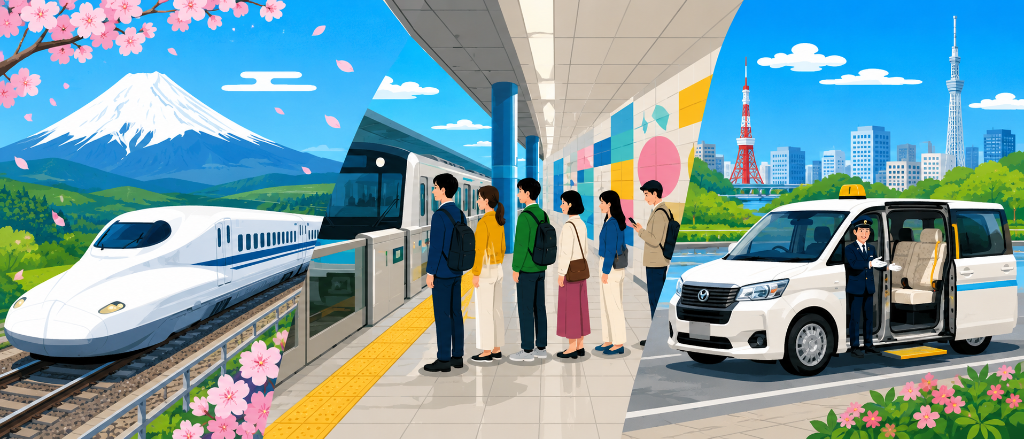
- Queue behind the yellow floor markers
- Let passengers exit before boarding
- Set your phone to silent (manner mode)
- Give up priority seats when needed
- Keep your voice low
❌ Avoid
- Talking on the phone
- Eating on local trains
- Blocking the doors with large bags
- Sitting in priority seats if you don't need them (rush hour)
The 8 Essential Train Rules
Eating is expected — buying an ekiben (station bento) to eat on the Shinkansen is a beloved tradition
Reclining seats: It is acceptable to recline, but in Japan it is considered considerate to briefly turn around and let the person behind you know first
Reserved vs unreserved cars: Check your ticket carefully — reserved (指定席) and unreserved (自由席) cars are different
Overhead luggage: Large suitcases should go in designated luggage areas, not the standard overhead rack
💡 IC Cards: Suica and Pasmo IC cards work on almost all trains, subways, and buses in Japan. Tap in, tap out — no ticket purchase needed. Load them at any station or convenience store.
Navigate trains with confidence — stay connected
Google Maps and Hyperdia work brilliantly for Japanese train navigation. A Japan eSIM gives you data from the moment you land.
Get a Japan eSIM →Traveling with large luggage?
Luggage delivery (takuhaibin) sends your bags directly from the airport to your hotel. Skip the crowded trains entirely.
Browse Luggage Delivery →Frequently Asked Questions
Can I eat on Japanese trains?
On local and subway trains, eating is generally not recommended. On the Shinkansen and some limited express trains, eating is perfectly acceptable — ekiben (station bento) are specifically designed for this.
Can I talk on my phone on Japanese trains?
Phone calls are strongly discouraged on all Japanese trains. Set your phone to silent (manner mode) and step off the train if you need to take a call. Texting and using apps is fine.
What are priority seats?
Priority seats (yūsen zaseki) are reserved for elderly passengers, pregnant women, people with injuries, and passengers with small children. Near these seats, it is customary to turn your phone off entirely.
Is it OK to use a large suitcase on Japanese trains?
Yes, but be considerate. Store large luggage in overhead racks or designated spaces. During rush hour, it is better to avoid crowded trains with large bags — consider luggage delivery services instead.