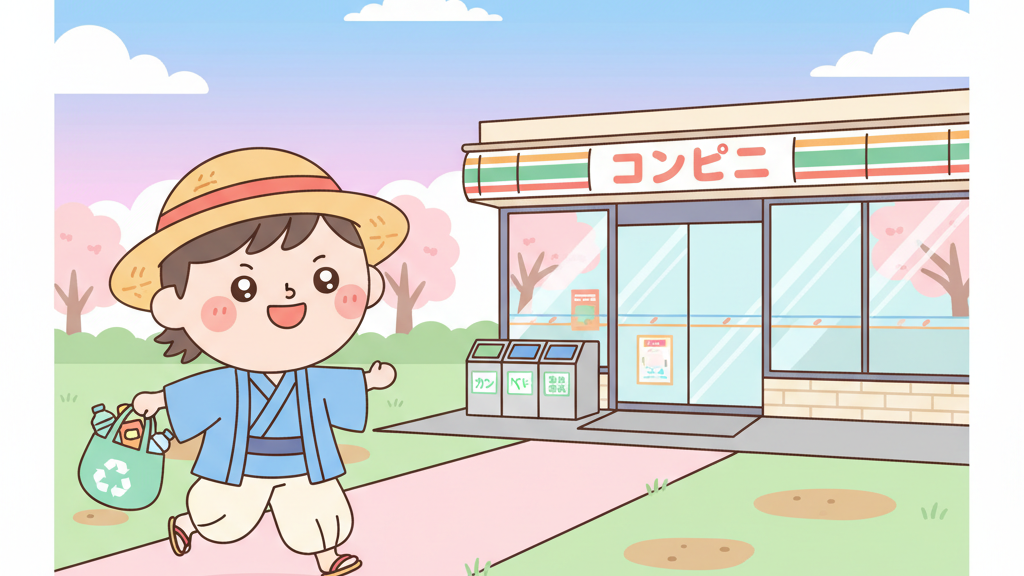
⚡ Quick Answer

✅ Do

  • Carry a small bag for your trash
  • Use convenience store bins for their products
  • Separate trash into categories if required
  • Take your trash home or back to your hotel

❌ Avoid

  • Leaving trash on the street or in parks
  • Stuffing trash into vending machine slots
  • Using a convenience store bin for non-store items
  • Dropping food wrappers while walking

Why Japan Removed Most Public Trash Cans

If you have spent time in Japan, you have probably noticed something strange: the streets are remarkably clean, yet public trash cans are almost impossible to find. How does that work?

Public trash cans became significantly less common in Japan after the 1995 Tokyo subway attack, when public bins were identified as a potential security risk in crowded urban areas. Stations and busy public spaces removed most bins as a precaution.

But here is the important thing: Japanese cities were already very clean before that change. The deeper reason Japan's streets stay spotless is a long-standing cultural norm — people simply carry their trash with them until they reach an appropriate disposal point, usually at home.

🎒 Practical tip: Pack a small resealable plastic bag in your daypack before heading out. It makes carrying wrappers, tissues, and small items effortless.

Where to Find Trash Cans in Japan

🏪

Convenience Stores (Konbini)

The most reliable source of trash bins. Most konbini (7-Eleven, Lawson, FamilyMart) have sorted bins near the entrance or counter — but these are intended for products purchased in the store. It is considered polite to buy something if you want to use their bins.

🎰

Vending Machines

Many vending machines in Japan have a small recycling slot next to them, intended only for the cans or bottles purchased from that machine. Use these only for the correct items.

🚉

Train Stations

Major train stations — especially Shinkansen stations and large terminals — often have small bins near platforms or in the food court area. These are more commonly found at stations with onsite food vendors.

🌸

Parks & Festival Areas

During festivals and cherry blossom season (hanami), temporary bins are often set up. Outside of event times, park bins are rare — carry your trash out with you.

Trash Sorting in Japan

Japan takes waste sorting seriously. Most bins you encounter are separated into categories — typically burnable (燃えるゴミ), plastic (プラスチック), cans and glass (缶・びん), and cardboard (段ボール). When using any public bin, sort your trash into the correct slot.

At your hotel or accommodation, you will usually find sorting instructions posted near the trash area. Follow them — incorrect sorting is something Japanese residents take quite seriously.

Why Japan Stays Clean Despite No Bins

The answer is simple: people here genuinely internalize the rule. A child in Japan learns from an early age to carry their trash home. It is not enforcement — it is culture.

As a visitor, joining in this habit is one of the most genuine ways to show respect for the country you are traveling in. And practically speaking, the streets really do stay cleaner as a result.

Common Questions

Why are there no trash cans in Japan?
Public trash cans were largely removed after 1995 for security reasons, but the deeper reason is cultural — Japanese people carry their trash home as a personal responsibility. Streets stay clean through collective habit, not enforcement.
Where can I throw away trash in Japan?
Convenience stores (konbini) have bins near the entrance for their products. Vending machines have small recycling slots for cans and bottles. Major train stations sometimes have bins. When in doubt, carry your trash until you reach your hotel.
Is it rude to eat while walking in Japan?
Generally yes — eating while walking (aruki-gui) is considered impolite in many parts of Japan. It is better to stop near the stall and eat there before continuing your walk. Street food festivals are a common exception.
Can I use a convenience store bin for any trash?
Technically those bins are for products purchased at that store. It is considered polite to buy something if you use their bins — a drink or snack is a natural way to justify the visit.