🇯🇵 Japan Manners Guide
Shinkansen bullet train, people queuing at a subway platform, and a taxi with driver in Tokyo

🚄 Transport Etiquette

Navigate Japan's world-class transport system with confidence and respect

← Back to Home

🚇 Subway & Train Rules
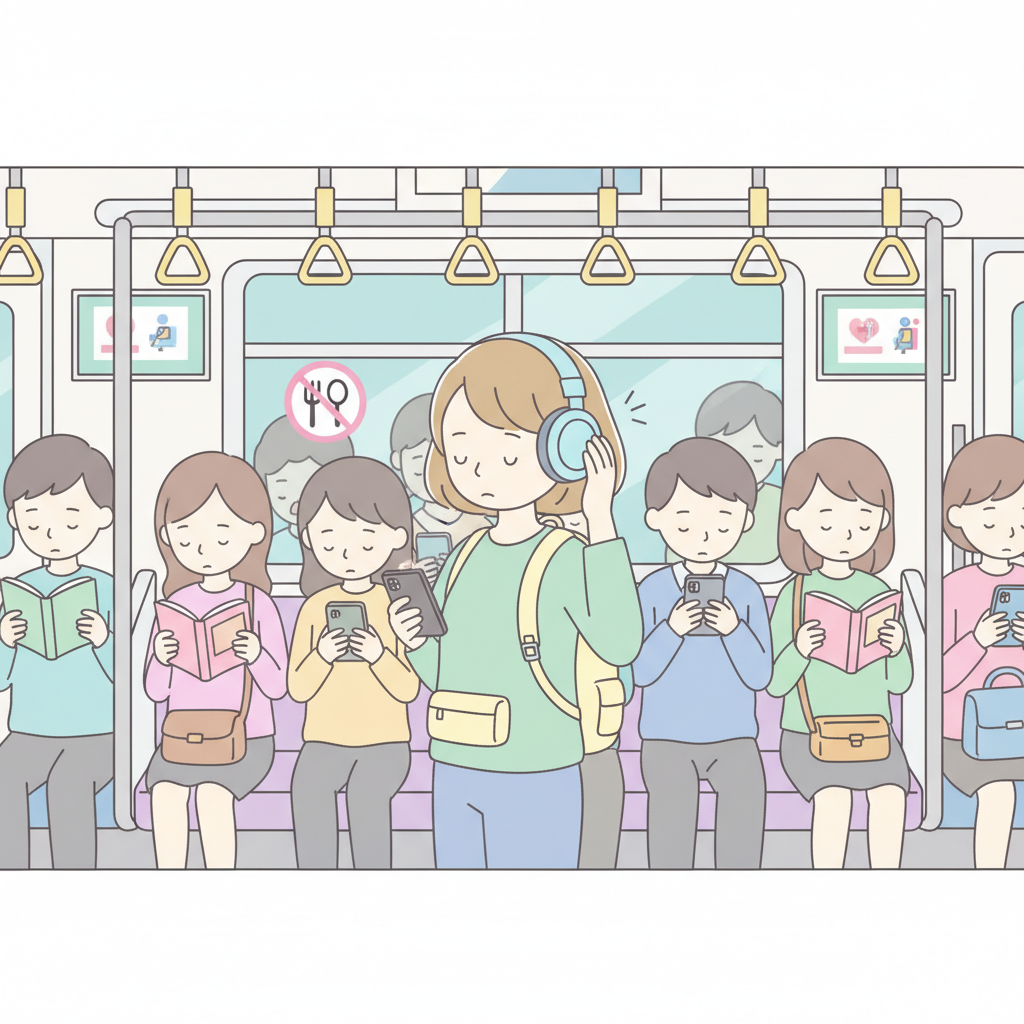

Subway and train manners in Japan: quiet, no phone calls, priority seats
--> How to Line Up for Trains in Japan ▶ Video Coming Soon

🎬 How to Line Up for Trains in Japan

📵

No Phone Calls

Phone calls on trains are strictly frowned upon. Set your phone to silent mode and text instead.

🎧

Keep Audio Private

Keep music and videos at a volume only you can hear. Noise-cancelling headphones are perfect for Japan's trains.

🚪

Let Passengers Off First

--> Let Passengers Get Off First ▶ Video Coming Soon

🎬 Let Passengers Get Off First

Always stand to the side of doors and let people exit before boarding. Queue orderly on the marked platforms.

💺

Priority Seats

Marked pink/blue seats are for elderly, pregnant women, and disabled passengers. Always offer your seat.

🎒

Bag Etiquette

--> Hold Your Backpack in Front on Crowded Trains ▶ Video Coming Soon

🎬 Hold Your Backpack in Front on Crowded Trains

On crowded trains, move your backpack to the front or place it in the overhead rack. Don't block the aisle.

🍔

No Eating

Eating on local trains is generally frowned upon (shinkansen is the exception). Drink from a closed container only.

🚄 Shinkansen Tips

--> Managing Large Luggage on Japanese Trains ▶ Video Coming Soon
🎬 Managing Large Luggage on Japanese Trains

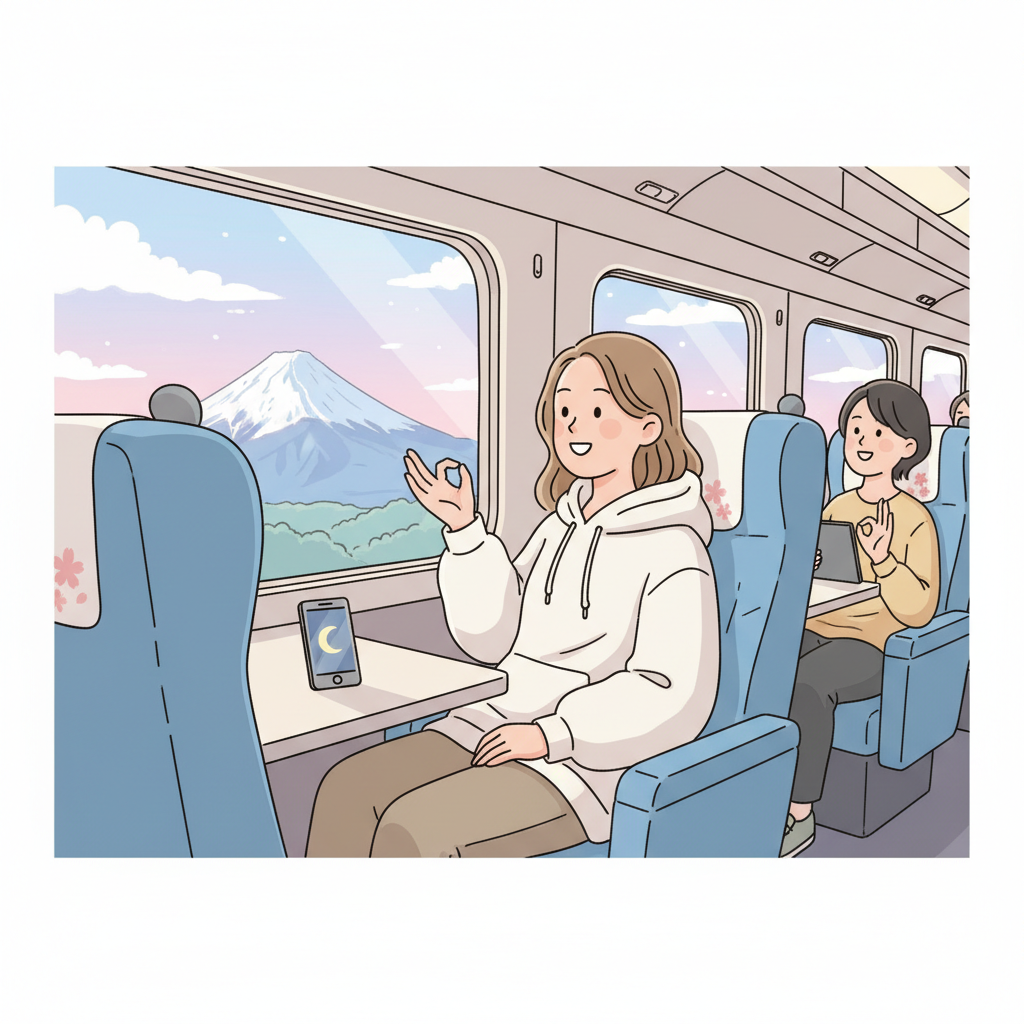
Shinkansen etiquette: recline seats politely and keep noise to a minimum

✅ Do This

  • Book reserved seats in advance
  • Eating bento is perfectly fine
  • Ask the person behind before reclining, and only recline slightly
  • Store large luggage in overhead racks
  • Be at the platform 5 min early

❌ Avoid This

  • Don't talk on the phone
  • Don't recline fully — a small angle is considerate enough
  • Don't leave trash on the train
  • Don't block the aisle with luggage
  • Don't miss your stop — check signs!
🎫

Reserved vs Non-Reserved

Most Shinkansen have both reserved (shiteiseki) and non-reserved (jiyuseki) cars. Reserved seats are highly recommended, especially during holidays and Golden Week.

🍱

Ekiben — Train Bento

Eating ekiben (station bento) is a beloved Shinkansen tradition. Pick one up at the station before boarding — each region has its own specialty.

🧳

Large Luggage Rules

Bags over 160cm total dimensions require a reserved "oversized luggage space" seat. Book in advance on the JR website or at the station.

🔇

Noise Level

Keep conversations quiet. Phone calls are not permitted in the seating area — step into the connector space between cars if you must call.

📶

Stay connected across Japan

A Japan eSIM gives you instant data from the moment you land — no SIM swap, no queues at the airport.

Get a Japan eSIM →
🚚

Traveling with large luggage?

Airport-to-hotel luggage delivery lets you skip crowded trains entirely. Delivery is available from all major airports — your bags arrive before you do.

Browse Luggage Delivery →

🚕 Taxi Manners

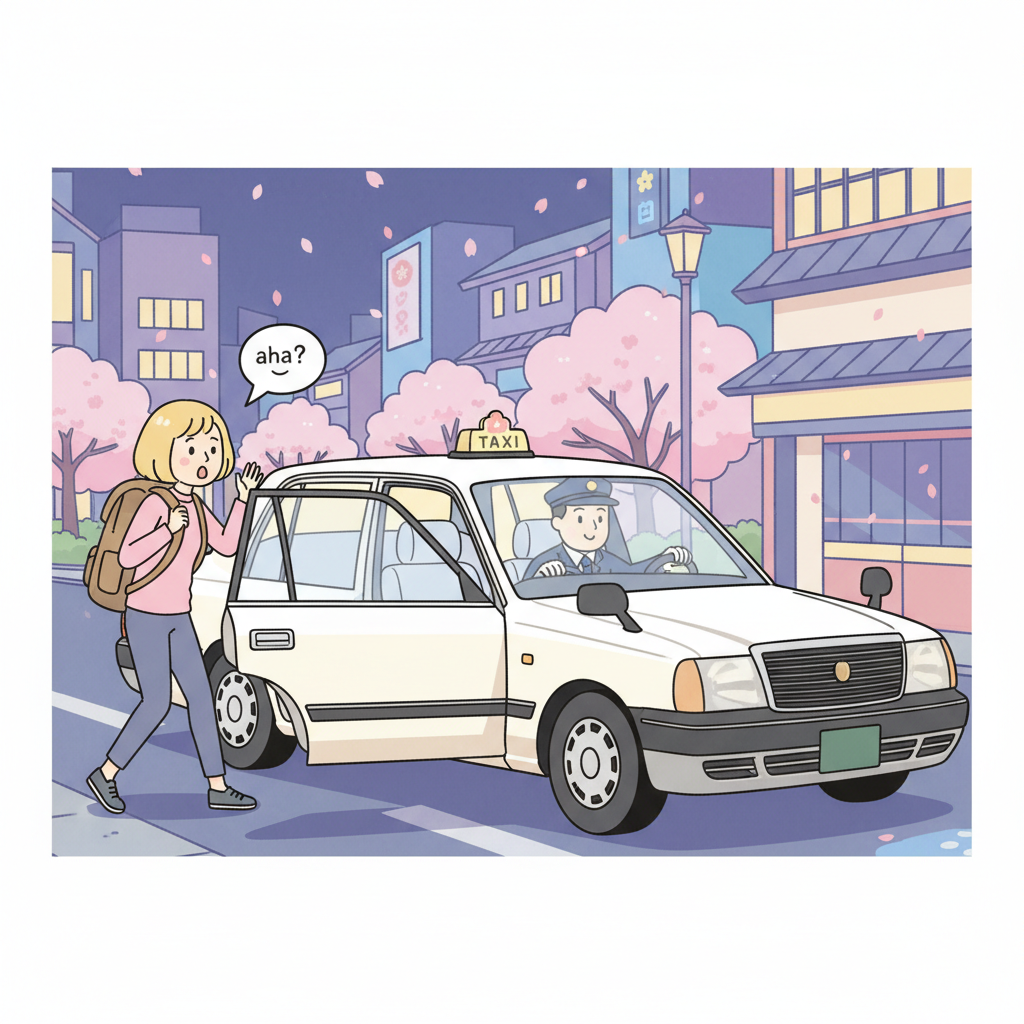
Japanese taxi: automatic door and white-gloved driver etiquette
🚗

Automatic Doors

Taxi doors in Japan open and close automatically. Never touch the door handle — let the driver operate it.

💴

Pay with Cash

Many taxis accept IC cards or credit cards, but cash is always safest. Have yen ready.

🗺️

Show the Address

Show the driver a map or written address in Japanese — verbal directions can be tricky for foreign names.

🚭

No Smoking

All taxis in Japan are non-smoking. Don't eat or drink in the taxi either.

🙏

Tipping is Not Expected

Tipping is not customary in Japan — it can even cause confusion. Simply say arigatou gozaimasu when you arrive.

📱

Booking Apps

Japan Taxi and GO apps let you book in English. Especially useful late at night or in areas where taxis are hard to hail.

🚖

Skip the taxi queue at the airport

Private airport transfers are fixed-price and meet you at arrivals — no meter anxiety, no language barrier.

Book a Private Transfer →

🚌 IC Cards & Buses

💳

Get an IC Card

Suica or ICOCA cards work on trains, buses, and even convenience stores across Japan. Tap in and tap out — no need to buy tickets each time.

🚌

City Bus Rules

In most Japanese cities, you board from the rear and pay at the front when you exit. Some city buses use front-boarding with prepayment — check the sign at the door.

🔇

Keep It Quiet on Buses

Same as trains — no phone calls, keep music to yourself, and give up your seat for elderly passengers or those with disabilities.

🔔

Press the Button Early

Press the stop button well before your destination so the driver has time to pull over. Missing your stop means waiting for the next one.

💳

JR Pass — Worth It?

If you're visiting multiple cities, a Japan Rail Pass can save you significant money on Shinkansen travel. Purchase before you arrive in Japan.

Check JR Pass Options →
🚗 Road Signs for Rental Car Drivers

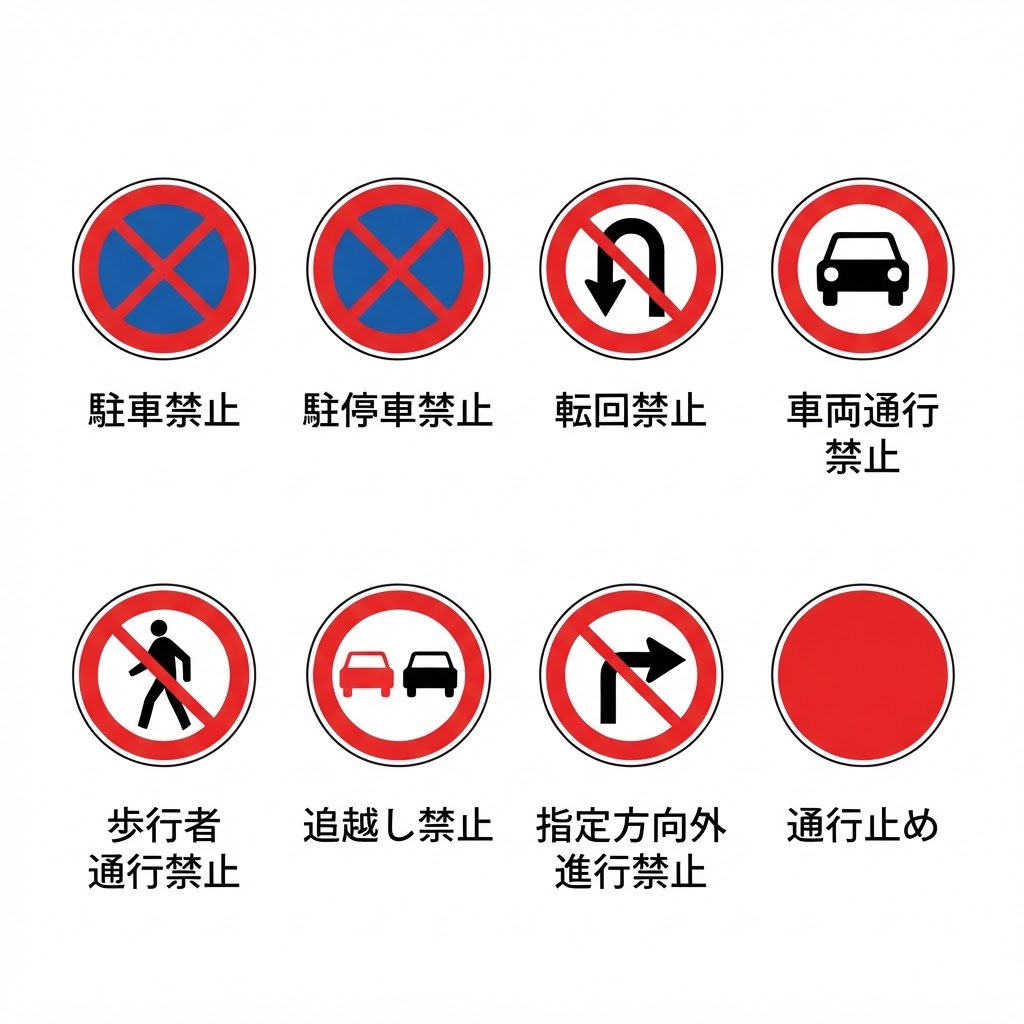
Renting a car in Japan? Japanese road signs may look unfamiliar, but most use international symbols with Japanese text. Here are the essential signs you need to know — organized by type. Red circles mean "prohibition," yellow diamonds mean "warning," and blue circles mean "mandatory instruction."

🚫 Regulatory Signs (禁止・規制)

Japanese regulatory road signs - prohibition signs
🚗

車両通行禁止

Sharyō tsūkō kinshi

No Vehicles — All motor vehicles prohibited from entering.

🅿️

駐車禁止

Chūsha kinshi

No Parking — Parking is prohibited at all times on this section of road.

⏹️

駐停車禁止

Chūteisha kinshi

No Stopping or Parking — No stopping for any reason, including loading/unloading.

↩️

転回禁止

Tenkai kinshi

No U-Turn — U-turns are prohibited. Common near intersections and on narrow roads.

🚶

歩行者通行禁止

Hokōsha tsūkō kinshi

No Pedestrians — Pedestrians are not allowed to enter this road/expressway.

🚫

追越し禁止

Oikoshi kinshi

No Passing — Overtaking other vehicles is prohibited on this section of road.

📢

指定方向外進行禁止

Shitei hōkō igai shinkō kinshi

Direction Restriction — Vehicles may only proceed in the direction(s) indicated by the arrow(s).

🚷

通行止め

Tsūkō-dome

Road Closed — All traffic is prohibited from entering this road section.

⏱️ Speed & Stop Signs (速度・一時停止)

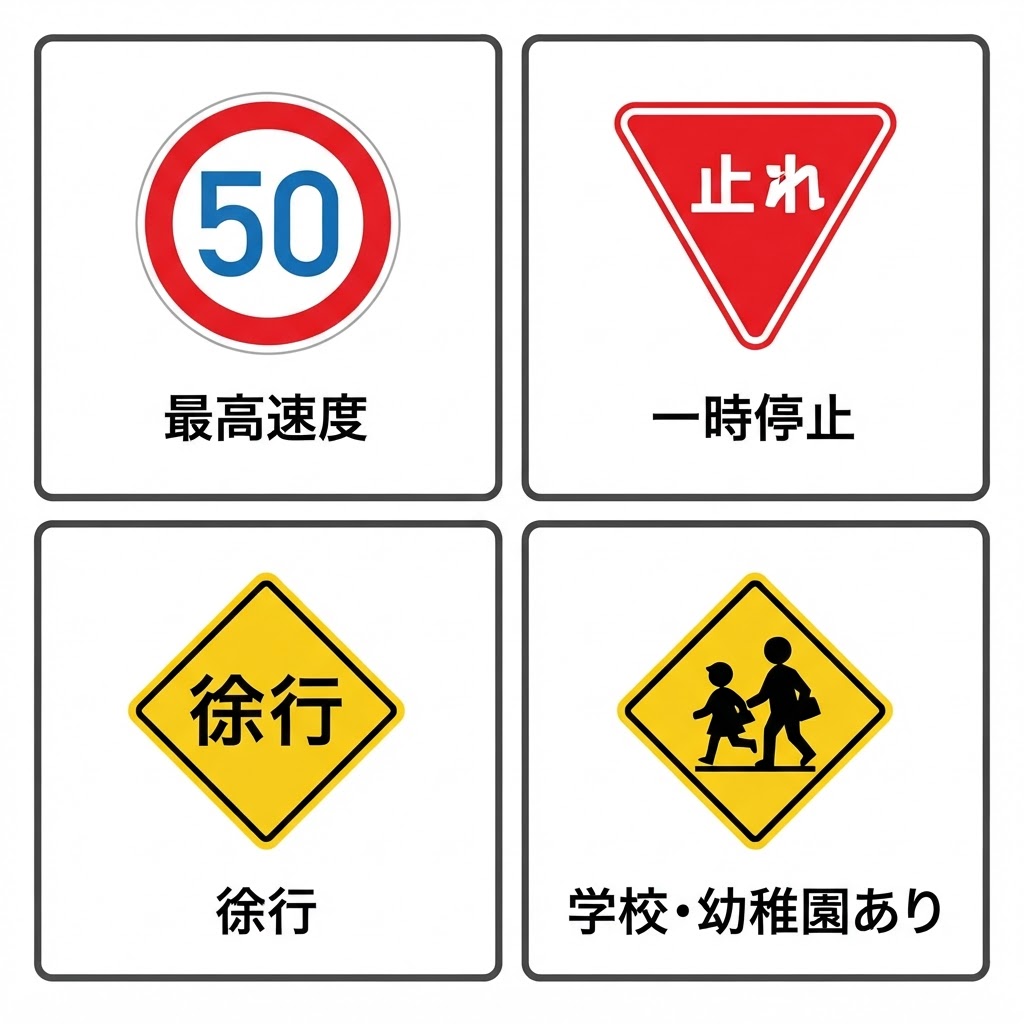
Japanese speed limit and stop signs
50

最高速度

Saikō sokudo

Speed Limit — The number shown is the maximum speed in km/h. Typical: 30–60 in cities, 100 on expressways.

一時停止

Ichiji teishi

Stop — Come to a complete stop. Unlike "yield," you must fully stop and check for traffic before proceeding.

🐢

徐行

Jokō

Slow Down — Drive at a speed slow enough to stop immediately if needed. Usually means 10 km/h or below.

🚸

学校・幼稚園あり

Gakkō / yōchien ari

School Zone — A school or kindergarten is nearby. Watch for children, especially during morning/afternoon hours.

⚠️ Warning Signs (警戒標識)

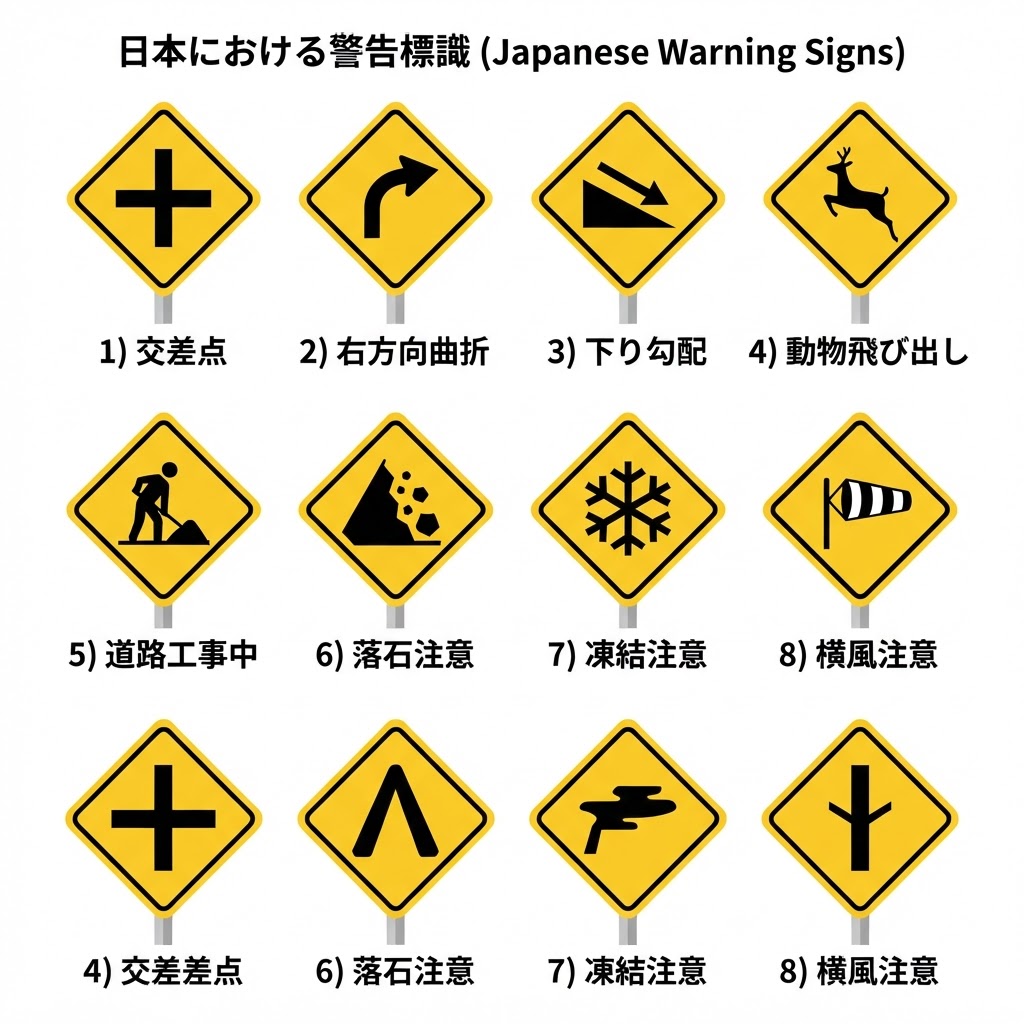
Japanese warning road signs - yellow diamonds
🔄

交差点あり

Kōsaten ari

Intersection Ahead — An intersection is ahead. Slow down and prepare to yield.

↪️

右方向曲折あり

Migi hōkō kyokusettsu ari

Curve Ahead (Right) — A sharp right curve is ahead. Reduce speed before entering the curve.

⬇️

下り勾配

Sagari kōbai

Downhill Slope — Steep downhill ahead. Use engine braking and do not overspeed.

🦌

動物が飛び出すおそれあり

Dōbutsu ga tobidasu osore ari

Wildlife Crossing — Wild animals (deer, fox, boar) may cross the road. Especially common in rural Hokkaidō and mountain roads.

🚧

道路工事中

Dōro kōji-chū

Road Construction — Construction work ahead. Reduce speed and follow flagperson directions.

🪨

落石注意

Rakuseki chūi

Falling Rocks — Risk of rocks falling onto the road. Common in mountainous areas, especially after rain.

❄️

凍結注意

Tōketsu chūi

Freezing Road — Road may be frozen, especially in winter mornings. Drive extremely carefully. Common in Hokkaidō and mountain passes.

🌉

横風注意

Yokokaze chūi

Crosswind Warning — Strong crosswinds possible. Common on bridges and coastal roads. Grip the steering wheel firmly.

🔵 Mandatory Signs (指示標識)

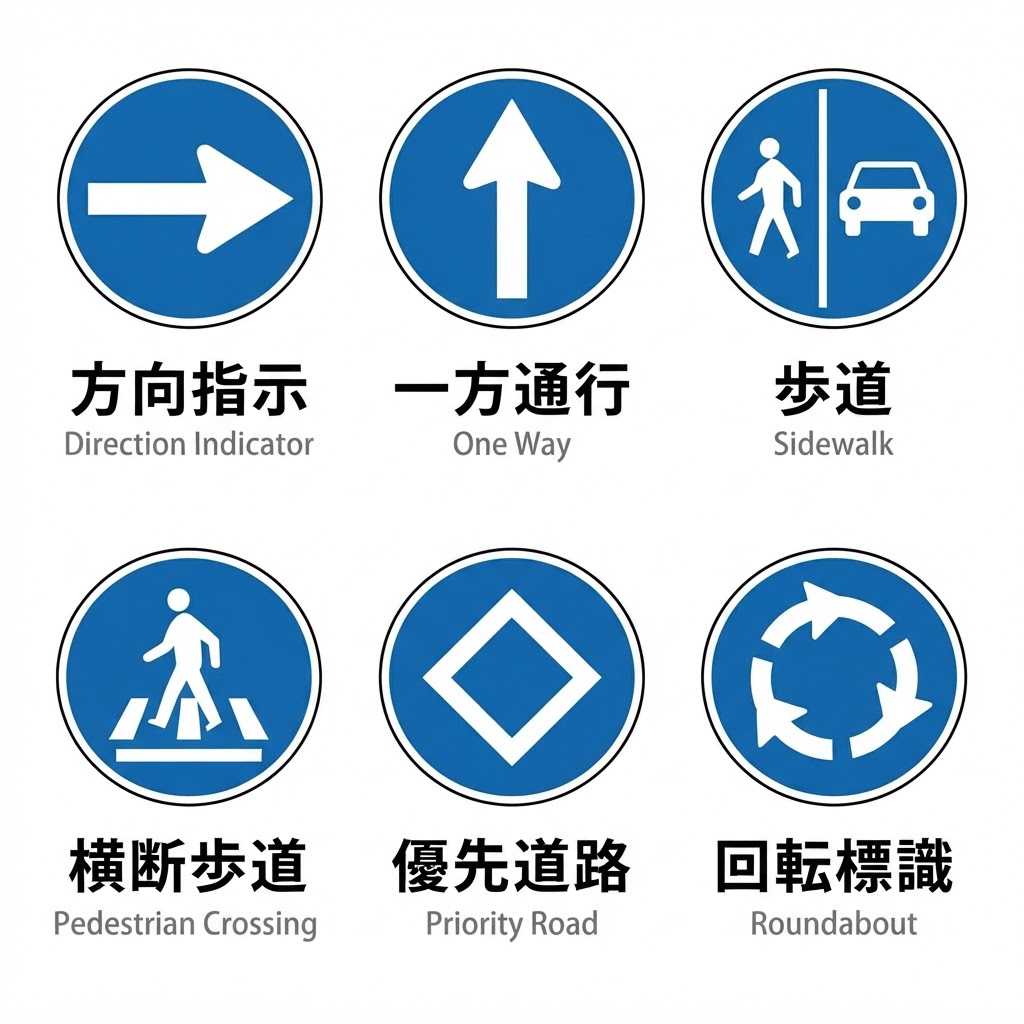
Japanese mandatory road signs - blue circles
↪️

方向指示

Hōkō shiji

Direction Instruction — Vehicles must proceed in the direction indicated by the arrow. Common at intersections.

➡️

一方通行

Ippō tsūkō

One Way — Traffic flows only in the direction indicated. Do not enter from the opposite direction.

🚶

歩道

Hodō

Sidewalk — This area is for pedestrians. Vehicles must not drive on or park on the sidewalk.

🚸

横断歩道

Ōdan hodō

Pedestrian Crossing — Always stop for pedestrians at crosswalks. In Japan, pedestrians have priority.

🛣️

優先道路

Yūsen dōro

Priority Road — This road has right-of-way. Vehicles entering from side roads must stop and yield.

🔄

回転標識

Kaiten hyōshiki

Roundabout Ahead — A roundabout is ahead. Yield to traffic already in the circle, then merge.

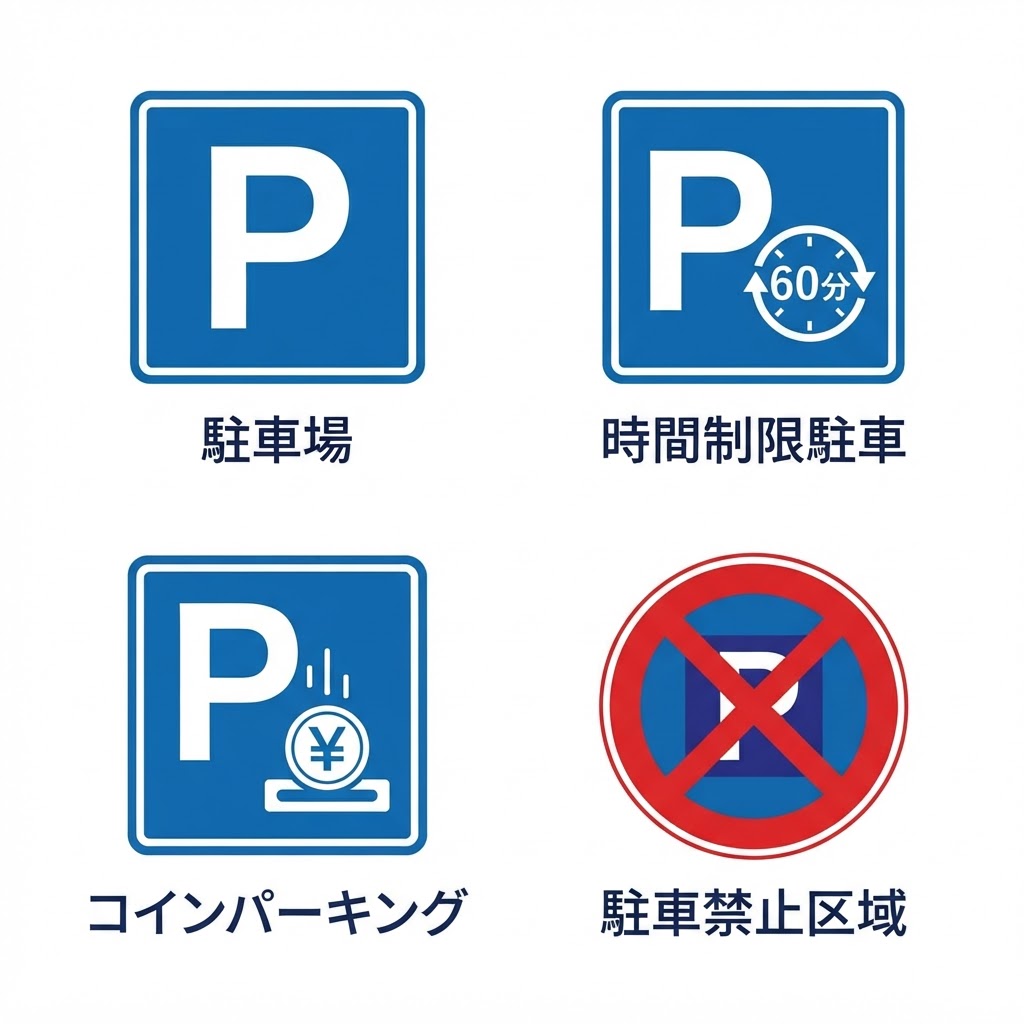
🅿️ Parking Signs (駐車場標識)

Japanese parking signs
P

駐車場

Chūshajō

Parking Area — Designated parking is available. Many require a fee; check the posted rates and time limits.

🅿️

時間制限駐車

Jikan seigen chūsha

Time-Limited Parking — Parking is allowed for a limited time (usually shown as "60分" = 60 min). Exceeding the limit may result in a fine.

🚗

コインパーキング

Koin pākingu

Coin Parking — Automated pay-by-the-hour parking. Take a ticket on entry, pay at the machine before leaving. Rates vary by location.

🚫

駐車禁止区域

Chūsha kinshi kuiki

No Parking Zone — On-street parking is prohibited. You may be fined ¥18,000 or more for parking here.

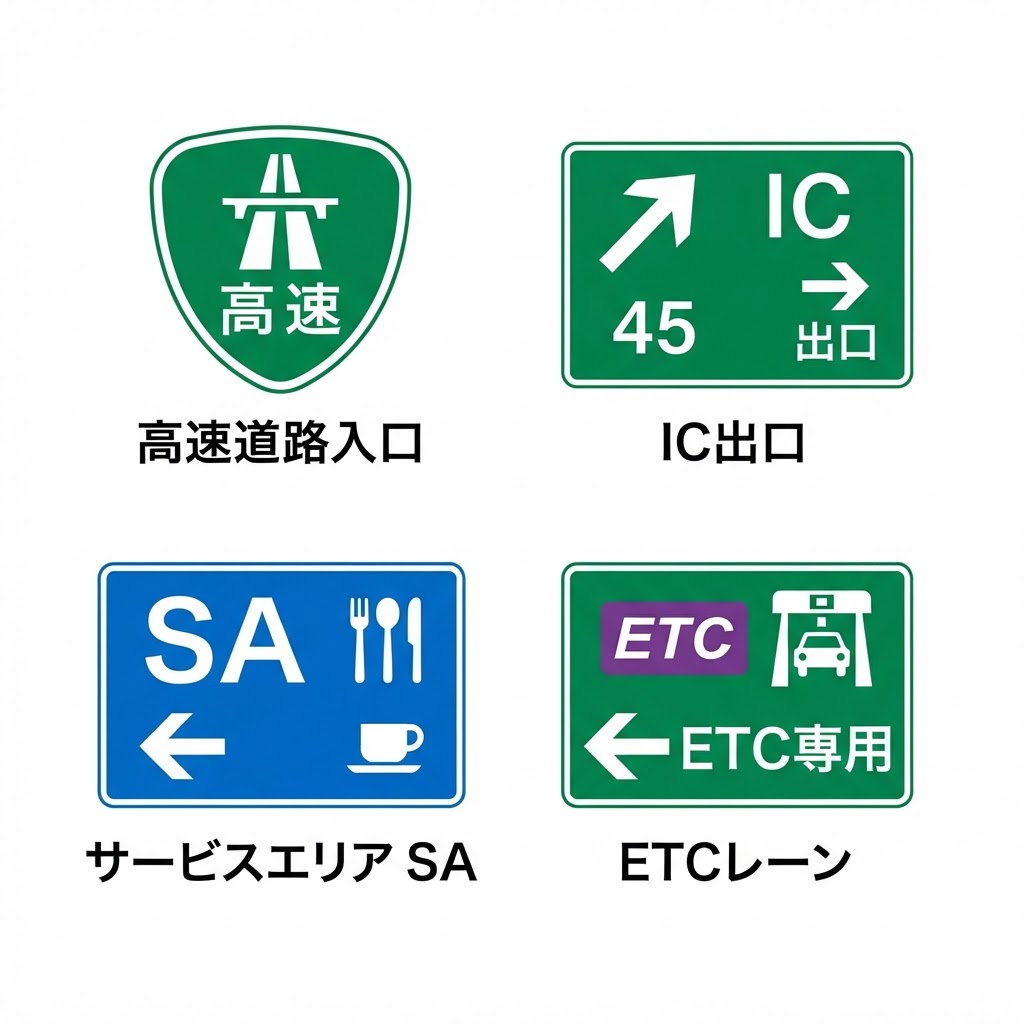
🛣️ Expressway Signs (高速道路標識)

Japanese expressway signs
🛣️

高速道路入口

Kōsoku dōro iriguchi

Expressway Entrance — Enter the toll expressway. Take a ticket or use ETC (Electronic Toll Collection) card.

🚪

インターチェンジ出口

Intāchenji deguchi

Expressway Exit (IC) — Exit the expressway at this interchange. Slow down before the toll gate.

SA / PA

Service Area / Parking Area

Service Area (SA) / Parking Area (PA) — SA has food, restrooms, gas; PA has restrooms and sometimes vending machines only.

ETC

ETC

Ētīshī

ETC Lane — Electronic toll collection. If your rental car has an ETC card, use this lane. Otherwise use the general (一般) lane.

📝 Important Notes for Rental Car Users

🎨 Sign Color Quick Reference

Red circle = Prohibition
Yellow diamond = Warning
Blue circle = Mandatory
Red square = Stop
Green = Parking allowed
Blue = Expressway / direction